
Facing the Storms of Karma
Thank you for the opportunity to share my experience about relationships and the changes I had to make to overcome weaknesses about myself.
First I want to share encouragement from my mentor in faith, Daisaku Ikeda. He writes,
Practicing Nichiren Buddhism doesn’t mean that we are immune to life’s problems. The storms of karma appear in many unexpected ways — as problems at home, at work, with our children, and so on. But with each challenge we overcome, we carry out our human revolution and transform the destiny of our families and loved ones. In fact, trying times are opportunities to make a leap forward to greater happiness.
-Daisaku Ikeda, The Wisdom for Creating Happiness and Peace, Part 2: Human Revolution, pg. 35
Prior to practicing Nichiren Buddhism, my experiences in life have always been on a wild roller-coaster ride that I wanted to escape from. My relationship with my mother was complex and painful, shaped by cycles neither of us knew how to break. This lingering pain led me to have other relationships that reflected that same pattern. For years I blamed her for everything wrong in my life.
Chanting for Courage and Inner Change
During the 2010 Chicago youth festival, I chanted Nam-myoho-renge-kyo with the determination to change my relationship with my mother. During my conversation with Gohonzon, I thought, “I will change this situation in five-years.” Well… that is not how the timing of one’s human revolution works. Everything I wanted to change or face head-on (in five-years) forced me to change quickly within two months after the festival.
When my cousin informed me that my parents were coming to visit, I chanted two-hours a day just to bring forth courage to face them. During this time, I kept chanting Nam-myoho-renge-kyo, seeking Sensei’s guidance, attended meetings, shared Buddhism with others, and connected with good friends in faith. All these efforts led me to have the best encounter with my parents even though there were moments when I wanted to pull negative energy to come out to play instead.
Why Was I Born Into This Family?
Over the years, I thought, “Why was I born into this crazy family? Why wasn’t I born into a family that gets along and loves one another? Why does my family wound one another with words and actions? What is the meaning of family? When will I have a happy family?”
Sensei Ikeda writes,
You may wonder why you were born into your family, or why your parents aren’t as kind as others, or why you are not blessed with a more beautiful home and a better family. You may even want to run away from home. But the fact is you were born to this particular family, in this particular place and on this planet Earth. You were not born into any other family. This fact encompasses the meaning of everything.
-Daisaku Ikeda, Faith into Action, pg. 53
Good friends in faith would offer strict encouragement. A WD leader once said, “Sunantha, you have to chant. You have to do your human revolution. If the situation causes you to suffer, then it’s you who needs to change, not the other person. You don’t want to encounter that same karma again next time do you?”
Over the years, all the causes I made to advance Kosen-rufu are intertwined with the happy family I longed for but never thought in a million years could be possible. SGI is the warmest, sincere, harmonious family I ever encountered and I wanted my family to reflect that.
The Mirror of Human Revolution
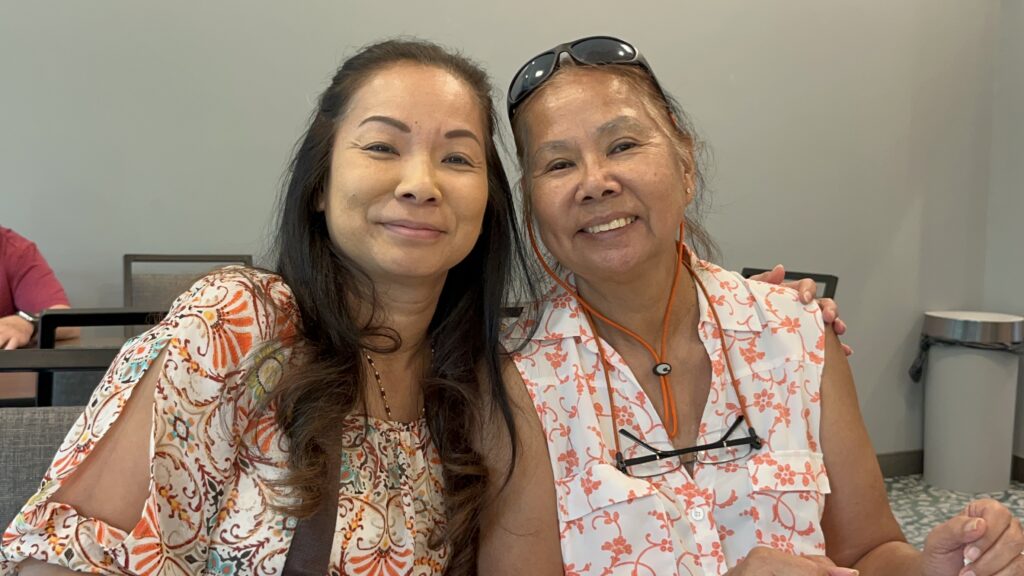
Let us fast-forward to my family relationships now. My relationship with my mother is beyond mind-comprehension. I often thought, “Who is this woman? What did she do with the mother I had before?” This woman smiles. She cares. She laughs. Her energy is warm and light. Her words were filled with sincerity. She taught me a cooking recipe. She spent most of 2021 with our family.
I had the courage to tell my mother, “Thank you for being the best mother. Thank you for teaching me how to be strong.” She replied, “I love you always.”
Overall, what I learned from this experience is that the more I continue to work for Kosen-rufu, and grow into a strong, happier human being, the more my environment will reflect that change. I still have more human revolution to do with other family members; however, the most difficult one was the inner transformation that took decades to achieve was with my mother. I understand clearly that this Buddhist practice is about doing one’s human revolution. An inner change in one’s heart and mind.
I truly believe it is because of my dedication to seek happiness and peace within my own life and to do my best to share that with those I encounter. Thank you to my Buddhist practice, my mentor in faith, good friends in faith, my family and all the people I encountered throughout my journey.
Conclusion: Change Starts with the Heart
President Ikeda once said to a young man who had greeted him in a very sincere and respectful manner:
What a pleasant greeting! I hope you’ll greet your family members and others in your environment with the same sincerity. Please show appreciation and respect for everyone. When I meet others, I always make a point of expressing my appreciation to them. I hope you’ll also always sincerely thank the people in your life. When words of gratitude well forth naturally from your heart, all your relationships will develop in a positive direction. It’s up to you, not the other person. Your own life condition determines everything. Striving to create a harmonious family starts with our own inner transformation, our human revolution. Those around us are indeed the mirror in which our human revolution is reflected. When we change, others change, our environment changes, and the world changes. One of the most important and fundamental arenas where this drama of human revolution takes place is our family.
-Daisaku Ikeda, The Wisdom for Creating Happiness and Peace, Part 2: Human Revolution, pgs. 195-196